
The Broken Legacy Thread
On the hands we hope will receive our life’s work, and the wider family we forget to name

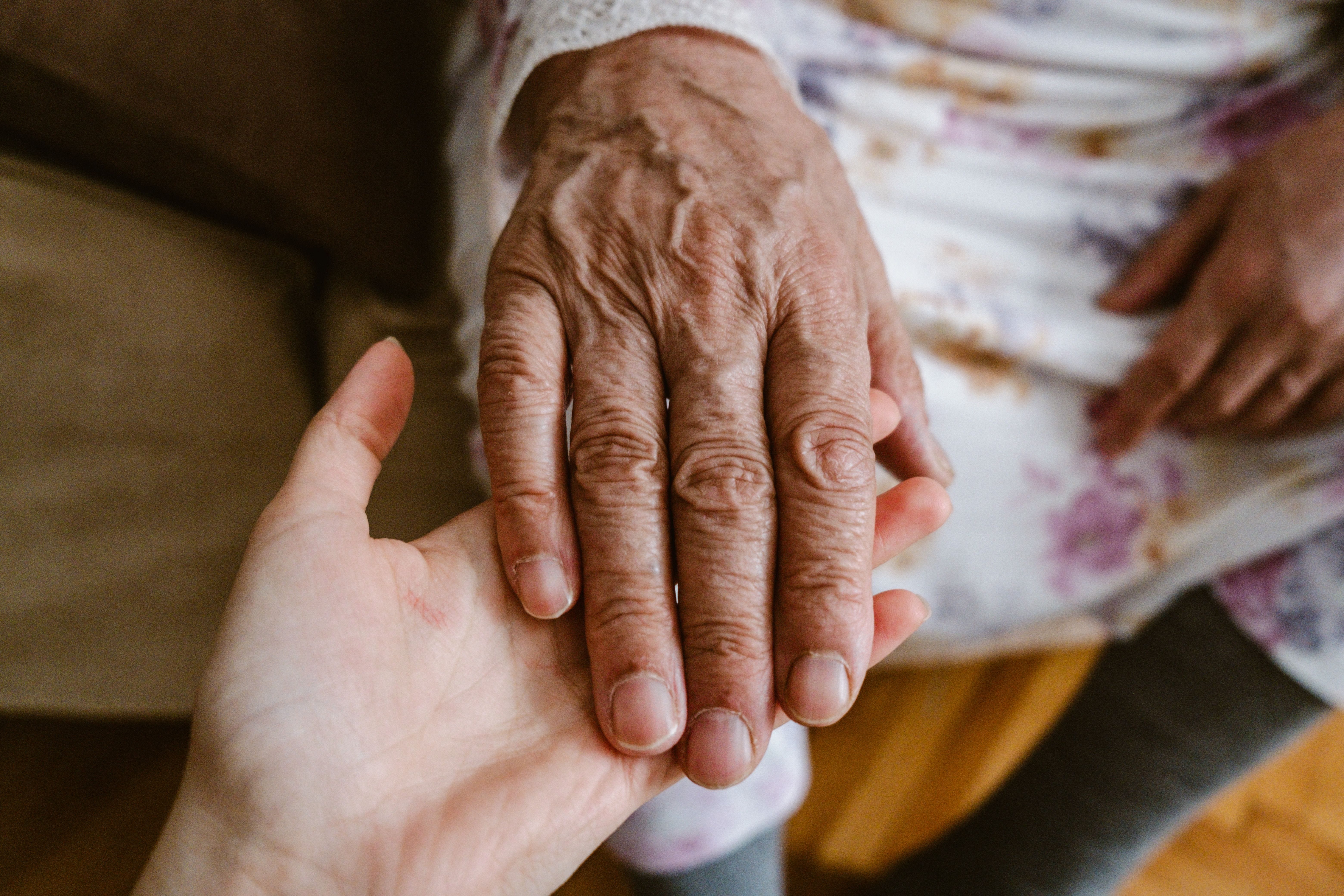
There is a moment near the end of a long life when a person turns to offer what they have gathered. A lifetime of understanding rests in their open hands. They have stories, and a way of meeting the world that took seventy years to shape, and they are ready to pass it forward. Too often the hands meant to reach back are busy somewhere else.
We speak of a world grown short on elders. We are also grown short on receivers. Stephen Jenkinson has given us language for the first hunger, the shelves full of old people with no one apprenticed to carry what they know. The other half of that hunger sits quietly across the table. A gift asks for a pair of hands willing to take it.
We have shrunk legacy down to a number on a page. Money moves from one account into another, we call it inheritance, and we believe the work is done. Real legacy was always larger. It lives in the values a family chooses to stand for. It lives in the felt sense of belonging to a line, a story begun before you were born and meant to continue after you are gone. A name carries weight when it carries meaning. Strip the meaning away and only the money is left.
The middle generation often cannot pause long enough to receive. They are deep in the building of their own lives, proving themselves, raising their own children, carrying the same lesson their parents carried, the one saying a self-made person owes nothing to anyone and accepts help from no one. To receive a gift can feel like an admission of need. So the elder reaches out, and the beloved one in the middle simply has no free hand. The youngest ones, meanwhile, learn by watching. They see the holidays skipped and the grandparents set quietly aside, and they take in the skipping as the way of things. Disconnection passes down as surely as the silver.
I think of an international family who came to me carrying a grief they could no longer manage alone. Their adult daughter had cut contact, and the grandchildren lived behind that same wall, beyond the reach of a phone call or a letter. The history between them was tangled. They remembered the same events in ways that no longer matched, and the daughter carried real needs of her own, some of them touching her mental health. The parents made no claim to having done everything right. They had sat in therapy long before they sat with me. Across the years there had been a rhythm of return and leaving, return and leaving, and each turn of it reopened the wound in both generations.
By the time they reached me, time itself had grown short. One of them was facing a terminal illness. The other lived with an illness of the long, slow kind. They had built a life of real substance. There was money in it. There was also a long record of public service and a habit of quiet generosity toward the community around them. They wanted to leave all of it to their daughter and to the grandchildren they had never been allowed to know. The daughter wanted nothing of them.
We began with the practical questions, because the clock demanded it. We talked through ways to leave funds and letters to the grandchildren by means of a trust, and through a designated person who could act as a bridge after the parents were gone, someone able to hold the connection open from the far side of death. I helped them find a wealth team and an attorney who could put real structures in place, plans built to keep working long after the planners themselves were gone.
Underneath the planning sat the worry no document could answer. What if the daughter refused to let the children receive any of it? What if the children, still young and barely acquainted with their grandparents, grew up with no wish to carry the family’s name forward? A trust can move money across a border. A trust cannot make a grandchild care.
So we turned to the grief, and this was the harder room to enter. Sitting with them, I offered a thought that asked a great deal of them. Their daughter and grandchildren lived in another country, past their reach. The community around them, though, was close, and full of children with no one reaching toward them at all. What if the legacy could find other hands? What if their values could live on in their own town, in a scholarship or a service shaped around the things they had always cared about? To even consider it, they had to grieve. They had to grieve the relationship they did not have, and then the larger dream they might never live to see take root.
Another woman came to me with her grown son beside her, carrying a question about her late husband’s will. Their daughter was estranged. She would take the money and let the relationship lie where it had fallen. How should a mother hold something so painful?
I offered her three movements. Leave the door open for repair somewhere down the road, since none of us can know what a future self may come to want. Give the daughter what she was owed, freely, without turning it into a hook. Then grieve the loss of what lay outside her control. The other children had their own weather to move through, their anger and their sorrow at watching a sister take what their father built and walk away from all it stood for.
Here the real questions surface, the ones with no clean answer. Do we judge the one who leaves and never returns? Do we shame the one who takes the money and lets everything it stood for fall away? Human relationships hold more complexity than any verdict can contain. One person’s suffering rarely makes sense to the people standing outside it. The story driving someone away can look senseless from the kitchen table, and still it is the truest thing they know.
Estrangement is one way the thread breaks. Death is another. I have sat with parents who lost a son in his mid-twenties, a son who left a young wife and a baby behind. I have sat with a family whose son died by his own hand at thirty, leaving a wife in the wreckage of it. The grief in those rooms carried something extra, a disappointment with nowhere to rest, because the future the older generation had dreamed forward now had no one to receive it in the shape they had imagined. The banner they meant to place in a son’s hands lay on the ground. What they had to learn, slowly, was how to lift it and carry it toward someone else.
Each of these families arrived believing the same quiet thing. The work of a life belongs to one’s own blood, and only to one’s own blood. It is among the deepest assumptions we carry, woven so far into us we seldom notice it as a belief at all. We simply feel its truth in the body. The heartbreak comes when the blood will not, or cannot, receive.
So the real work, the work beneath the trusts and the letters, is a loosening of that grip. What if our kin are one possible set of hands among many? What if the village can carry our legacy too? There are children three streets over who would bloom under what we have to give. There are young people building something brave who would be steadied by an elder’s witness and an elder’s resources. To see them, we have to lift our eyes past the garden gate and let them rest on the wider field.
This is a large turning, and it asks us to grieve a belief we have loved. We have to mourn the particular dream, the grandchild on the knee hearing the old stories, before our generosity can open toward the stranger’s child who is also, in the oldest sense, our own. Grief clears the ground. On the far side of it, a larger family comes into view.
A family rarely finds this turning on its own, and they should not have to. I like to gather a team around them, a small circle of skilled people who can hold the different threads at once. A wealth advisor and an attorney build the structures of substance. A facilitator helps the family clarify what they actually value, beneath the inherited assumptions. Another tends the relational wounds and the somatic ones, the grief living in the body as much as in the mind. Together this circle helps a family reimagine what their wealth is truly for and where their deepest sense of identity lives. The hardest legacy questions only look financial. Underneath, they ask who we have been, and who we still hope to become as we hand our life’s work to the world.
The elder still stands with open hands. The gift is real, and it is ready. We believed for so long in only one set of hands. The older truth is more generous than that. The village has always been part of the lineage. A child we never met can carry our values forward as faithfully as a child of our own. When we can grieve the dream we held and widen the circle, the thread we feared was broken turns out to have been longer all along, long enough to reach the ones we never thought to name.
❧
Katharine (Kate) Appleton, LPC, SEP, MEd, is a somatic psychotherapist, relational consultant, international educator, and family legacy guide with over fifty years of experience helping individuals, families, and practitioners navigate life’s thresholds with presence and compassion. Learn more at www.kate-appleton.com or write to kate@kate-appleton.com.